Article
The requirements tell you who you are dealing with
Strict requirements are rarely the problem. Requirements that don't add up are. Thomas Tinnesand of Inventura on reading the buyer through the tender documents.
Many people open a new tender and go straight to the requirements specification. That is starting at the wrong end, says Thomas Tinnesand, partner and CCO at Inventura. The requirements don't just tell you what to deliver, but also who you are dealing with.
Read all of the tender documents
Behind the requirements lies a choice: what does the buyer want to control itself, and what does it leave to the market? So read every part of the tender documents:
- The qualification requirements show how high the bar is set.
- The requirements specification shows how much room to manoeuvre you get.
- The award criteria show what gets rewarded.
- The contract conditions show how the risk is allocated.
The contract is easy to skip. "Very often you see a standard contract and assume that's taken care of. There may well be changes in there," says Thomas.
Look at the level of detail too. A functional specification leaves room for method and solution. Lots of mandatory requirements often means price will decide.
Inconsistent requirements are more dangerous than strict ones
"Strict requirements can be very predictable to work with," says Thomas. "What's unpredictable is when there's inconsistency in how the requirements are set." Look at these three sentences, which could easily appear in the same set of tender documents:
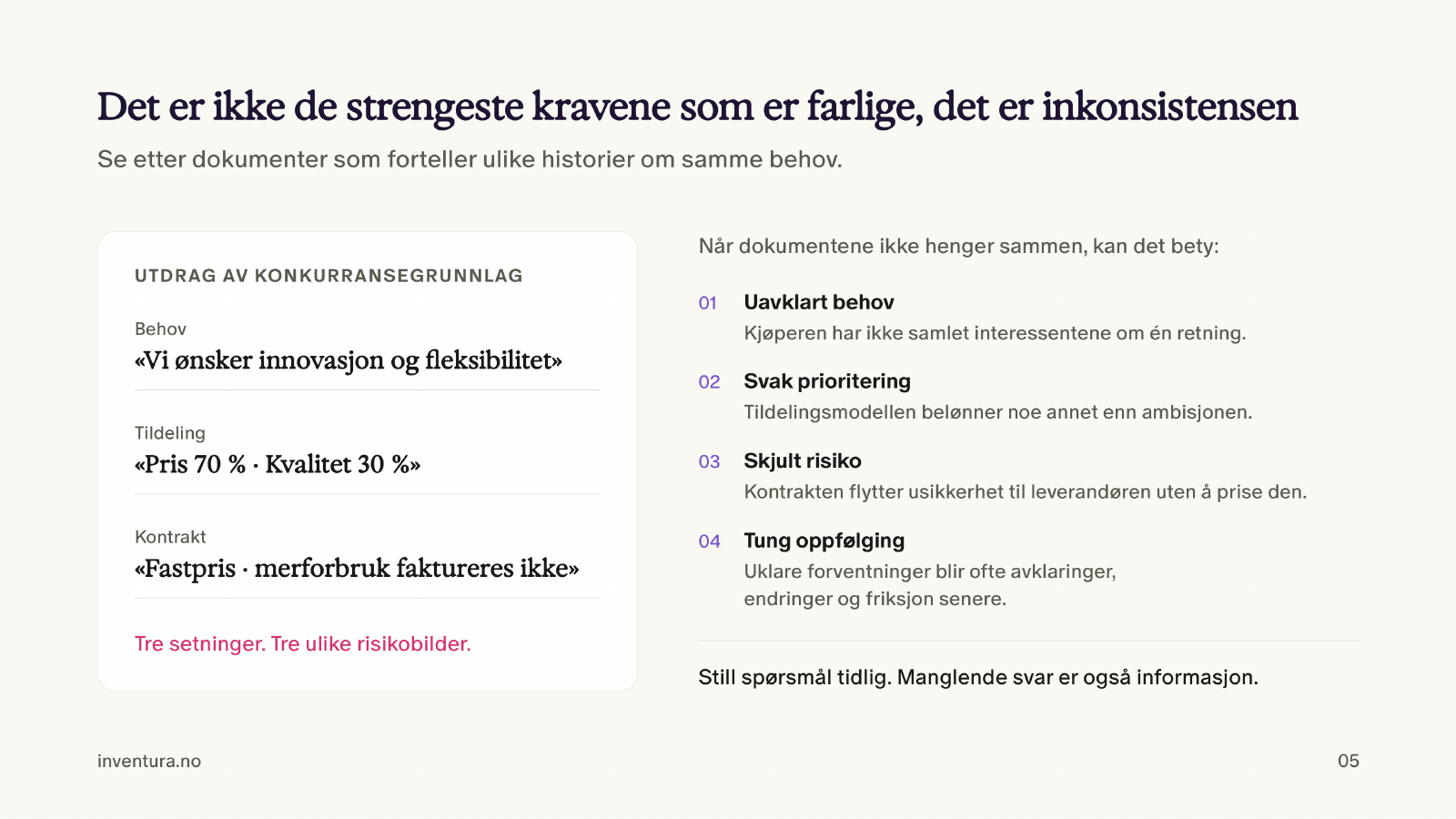
The buyer wants innovation and flexibility, but the weighting rewards low price, and the contract gives you no way to price changes. Contradictions like these often mean the need is unclear and the risk is hidden. "Then you're really setting things up for arguments after the contract is signed."
So ask the buyer early what they actually mean, ideally through clarification questions well before the deadline. No answer is information too.
Assess how mature the buyer is
A mature buyer knows its own needs and describes the problem well, even if it doesn't necessarily know the solution. There is a clear thread from the qualification requirements to the contract, and the risk sits where it can be managed.
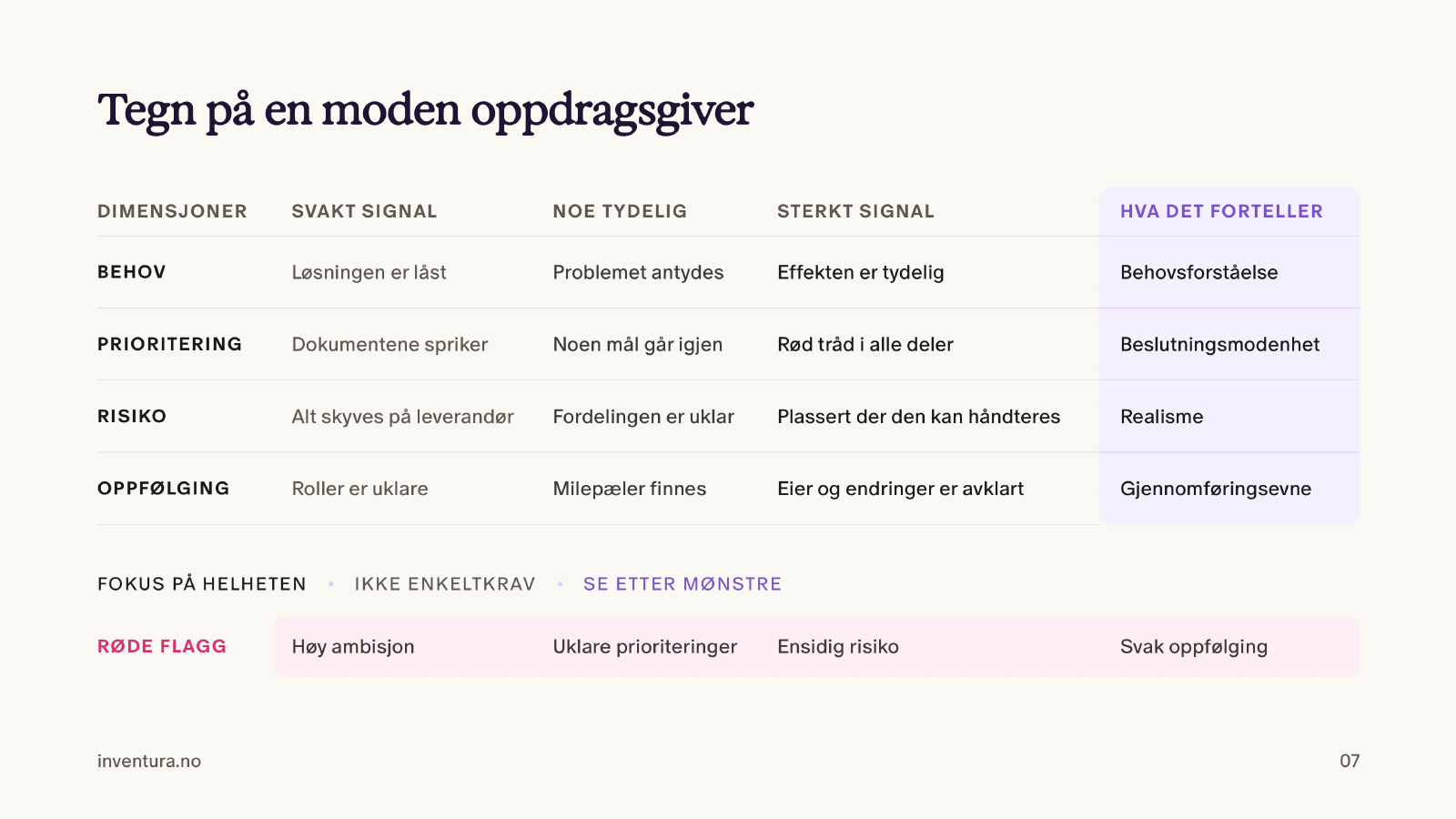
Look out for these red flags:
- high ambitions with unclear priorities
- risk that is always pushed onto the supplier
- little insight into how the follow-up will work
So should you steer clear of immature buyers? Only if you are not ready for it, says Thomas. "It's not a problem to work with an immature buyer if you know that's what you're up against. The problem is if you don't know, and you walk into it naively."
Thomas Tinnesand is partner and CCO at the Norwegian consultancy Inventura. The advice comes from his talk and the panel discussion at Cobrief's breakfast seminar "How do you choose the right tenders for you?" on October 29, 2026.