Article
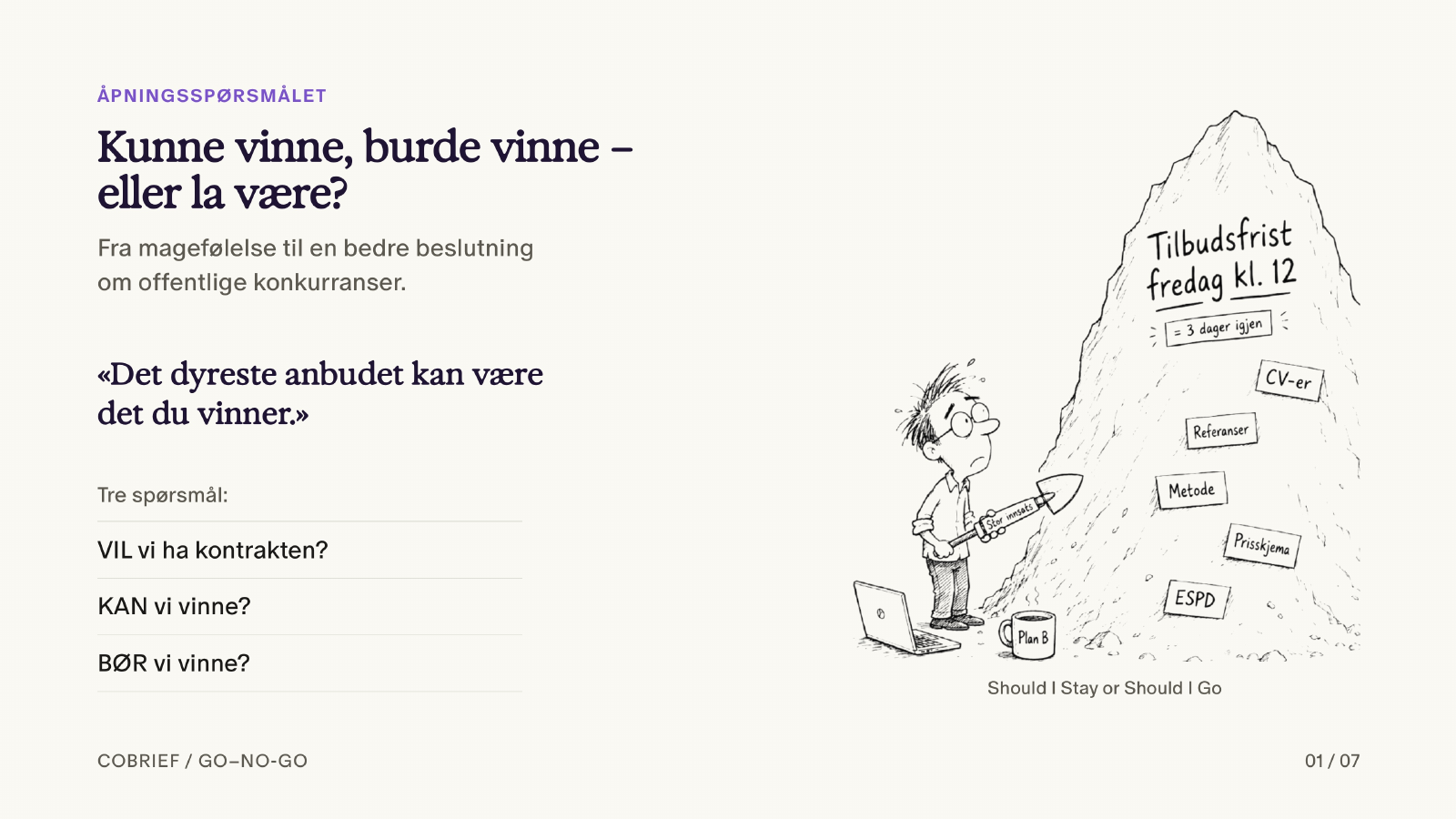
The most expensive tender can be the one you win
Before you ask if you can win, ask if you should. Christian Martinsen of Bonka Commercial Management on gut feeling, data and a playbook that saves you days.
A contract that doesn't pay off is one you can be stuck with for four years. So before you spend time on a bid, ask three questions: Do we want the contract? Can we win? Should we win? That is the advice from Christian Martinsen, who has worked with public procurement for over 30 years.
Test your gut feeling with data
Christian has made up his mind in a split second and won. He has also agonised for days, second-guessed his way to a yes and finished last. So use both: "Gut feeling spots the opportunities. Data qualifies whether your gut feeling is right or not."
Start with the history. Christian tells of a large customer that made it clear the next competition for its framework agreement would be different. When it came, only 75 words separated the new set of documents from the previous one. Look at the previous competition, and at who won it, before you believe anything is new.
Answer what the customer asks for
"The biggest pitfall is selling what you want to sell, and not answering what the customer is asking for," says Christian. Meeting the requirements only gets you in the door. You win on competitive advantages that score points, so find out:
- Which requirements are absolute?
- What is weighted, and how?
- What earns real points for quality?
- How does the pricing formula play out?
- Can we document our strengths?
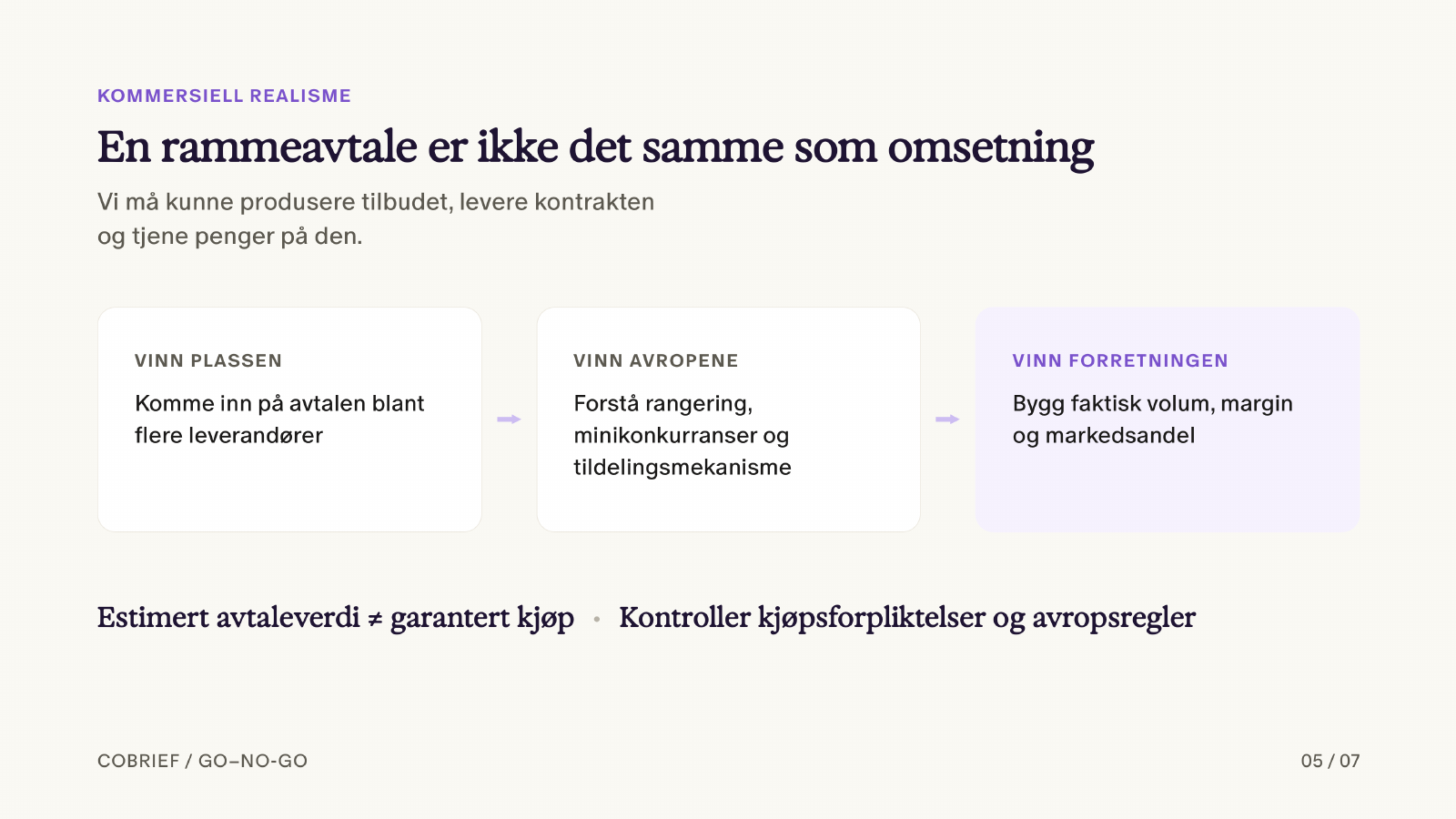
A framework agreement is not revenue
With framework agreements, it is especially important to ask whether you should win. A parallel framework agreement with several equally ranked suppliers gives you a place on the agreement, not a guarantee of sales. "It's a hunting licence," says Christian. At the same time, you commit to capacity, expertise and prices that may only be adjustable by two to three per cent a year. If few call-offs come in, you have tied up people and prices for years without earning from it. That is how the most expensive tender can turn out to be the one you win.
So register these agreements in your CRM at a nominal value of one. The agreement has no value in itself. The value comes with the call-offs.
Decide in advance how you will decide
The time until the submission deadline is often just 30 days. If 20 of them go on internal discussions, you have ten days left to produce the quality the customer expects. So create a playbook that settles in advance how you make the decisions: whether to bid, whether you need a steering group, whether the content is good enough, and whether you will sign if you win. If you make the go/no-go decision on day one or two, you get much more time for the content.
Dare to say no, too. Christian recently turned down a tender he could have won. "Priorities are everything, really. And we have to deprioritise things we might well have been in a good position to win."
Christian Martinsen is CEO of Bonka Commercial Management, a Norwegian advisory firm, and helps companies that want to succeed in the public sector market. The advice comes from his talk and the panel discussion at Cobrief's breakfast seminar "How do you choose the right tenders for you?" on October 29, 2026.