Article
Christian Martinsen: AI Can Help You Write a Tender, but It Can't Win the Competition for You
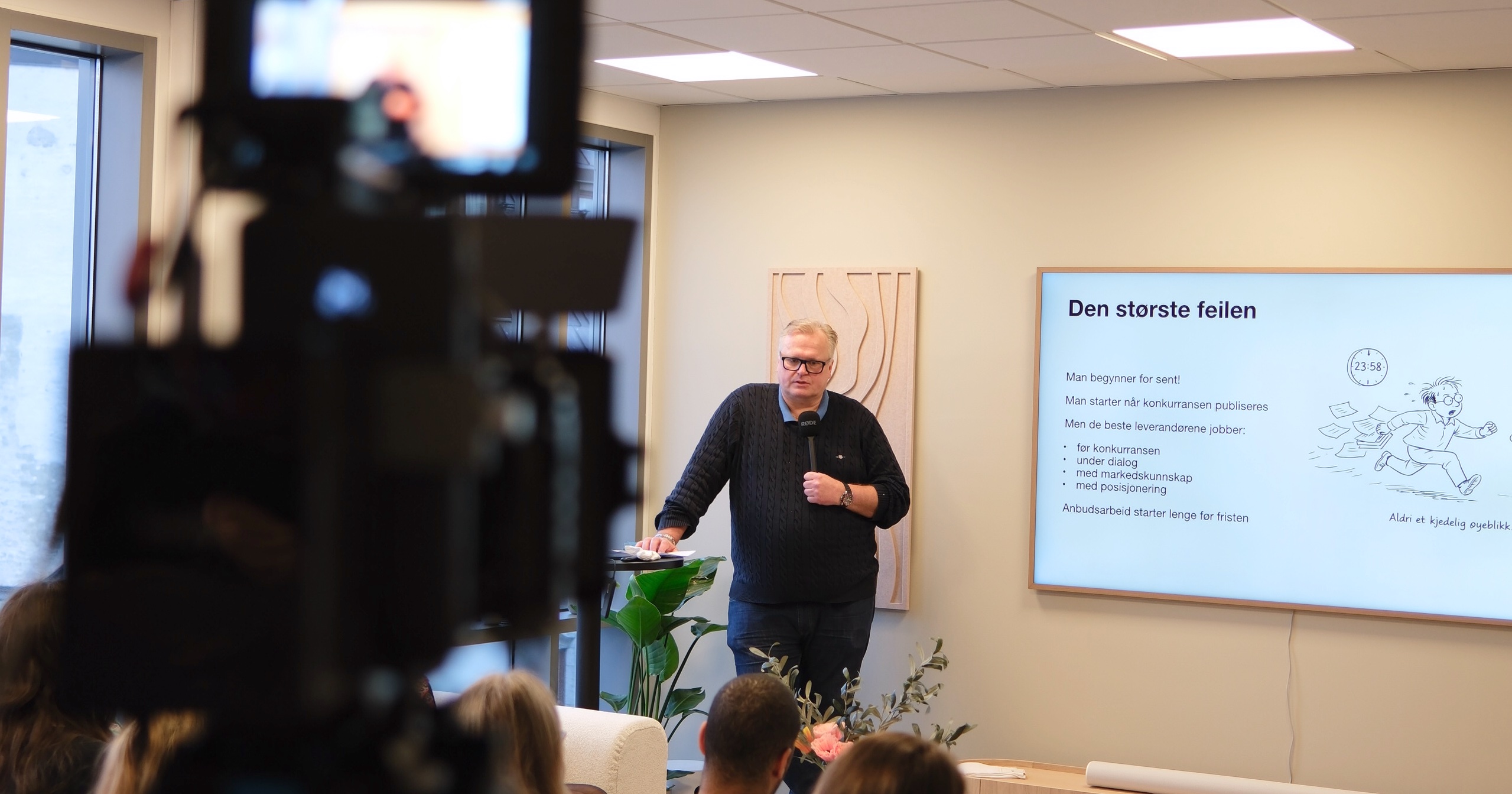
With over 30 years in the IT industry and public procurement, Christian Martinsen from Bonka Commercial Management shared his experiences with AI in tender work, and why craftsmanship still matters.
Christian Martinsen has worked with public procurement from the supplier side for over 30 years. He now runs the advisory firm Bonka Commercial Management (BCM), where he helps businesses break into the public sector market. At Cobrief's breakfast seminar on March 19, he shared his perspective on how AI has changed the rules of the game, and why those who believe AI alone can win competitions should think again.
74% Already Use AI in Tender Work
Christian opened by sharing the results of an informal poll on his LinkedIn profile. A full 74% responded that they use AI to analyze, draft, or respond to public tenders. The numbers may not have been surprising, but they tell an important story about how quickly the landscape has changed.
The problem, according to Christian, is not AI itself, but the uncritical use of it. "Upload, generate, edit a bit, and submit" produces boring tenders that offer little differentiation. When everyone uses the same tool in the same way, you end up with identical language, identical structure, and identical content. And then only one thing remains: price.
A Good Tender Is Still Good Craftsmanship
Christian's main message was that AI is an extremely powerful analytical tool, but it does not replace the human craftsmanship that characterizes winning tenders. He highlighted three areas where AI truly adds value: analyzing the tender documentation, decision support for go/no-go assessments, and streamlining time-consuming preparations.
Among other things, he demonstrated how he uses custom evaluation criteria in Cobrief to run structured risk analyses with heatmaps, a process that provides consistent decision-making foundations from one competition to the next. But he was equally clear about what AI cannot do: understand politics and organizations, read between the lines, and grasp where the customer truly wants to go.
Outcome Trumps Output
A central point in the presentation was that "outcome trumps output." It is not about producing as much text as possible, but about understanding what the customer actually needs. The best suppliers are not those who write the most, but those who spend time before the competition understanding the customer's situation, leveraging market knowledge, and positioning themselves correctly.
Christian encouraged everyone to use the insight tools available, such as who the customer typically buys from, how they evaluate, and what volumes they have, to build a solid foundation before even beginning to write.
A Warning About Data Security
Christian concluded with an important reminder about data security. In the eagerness to use AI, many share sensitive documents, security requirements, and trade secrets with language models without considering the consequences. Particularly for competitions involving security agreements and confidential documents, this is a real risk that cannot be overlooked.
Hand in Hand, It Can Be Great
Christian's closing words summarized the presentation perfectly: AI can help you write a tender, but it cannot win the competition for you. Hand in hand, human and machine, it can however be very good indeed.
Christian Martinsen is CEO of BCM and an advisor for companies looking to enter the public tender market. He presented at Cobrief's breakfast seminar on March 19, 2026.