3 Classic Mistakes That Can Cost You the Tender – and How to Avoid Them
Winning a public tender can be a time-consuming process that requires accuracy, understanding of the requirements, and strong competitiveness. Unfortunately, many companies make common mistakes that can cost them the tender, even if they are well qualified. Here we look at three classic mistakes and how you can avoid them.
Winning a public tender can be a time-consuming process that requires accuracy, understanding of the requirements, and strong competitiveness. Unfortunately, many companies make common mistakes that can cost them the tender, even if they are well qualified. Here we look at three classic mistakes and how you can avoid them.
1. Lack of Understanding of Qualification Requirements
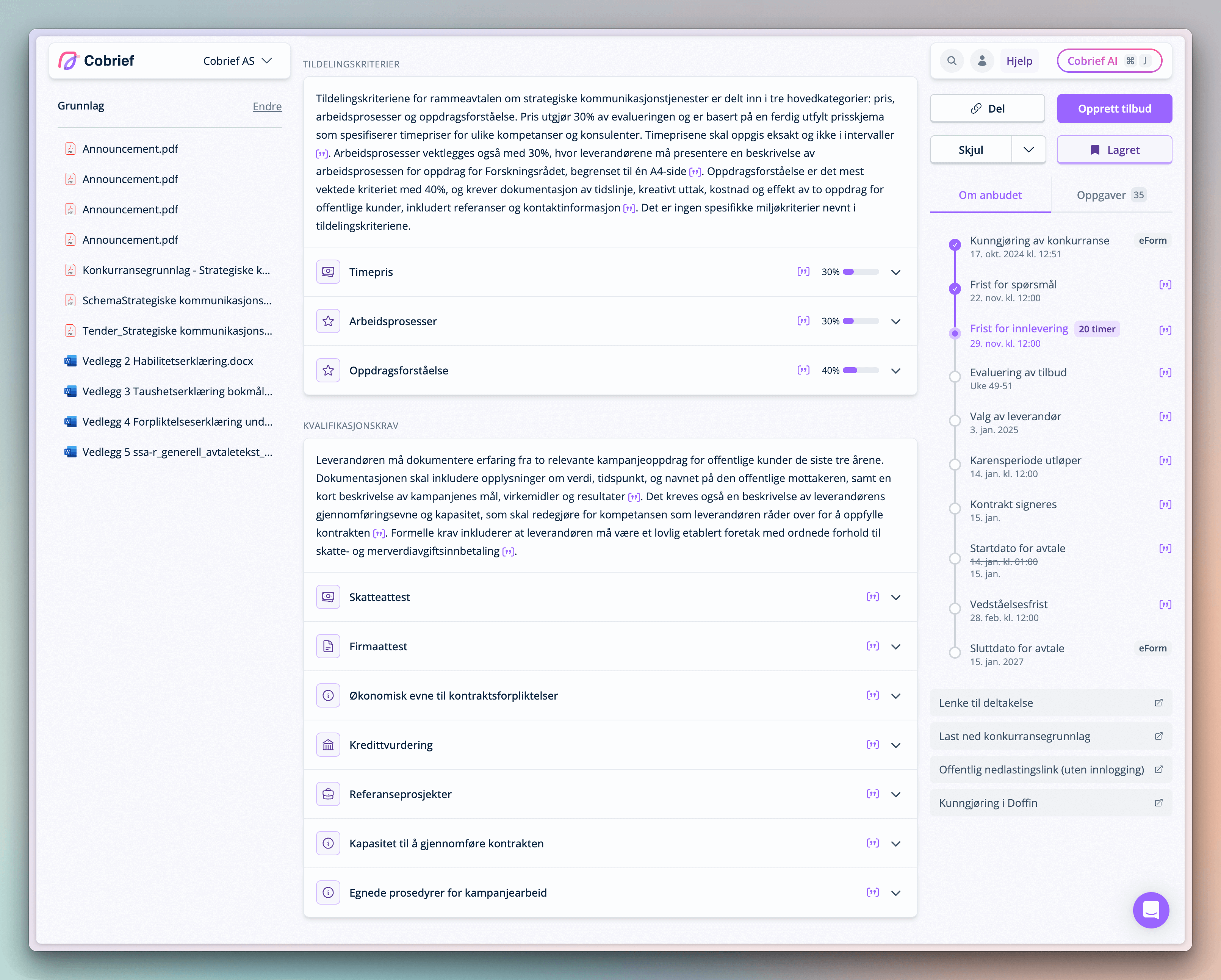
A typical mistake many suppliers make is insufficient understanding of the qualification requirements. Qualification requirements are specific conditions set by the contracting authority to ensure they only receive proposals from suppliers with the necessary expertise, experience, and capacity to carry out the assignment. These requirements can range from documentation of experience to specific certifications or financial capacity. A misinterpretation or failure to meet the requirements can lead to your proposal being rejected before it is evaluated, which can result in lost opportunities and wasted resources.
For example, a supplier may misunderstand the requirement for reference projects by including previous projects that are not directly relevant to the assignment they are bidding on. If the contracting authority requires references from projects with specific technologies or within a particular industry, and the supplier instead lists general projects without a clear connection to what is being requested, this can be seen as a failure to meet the qualification requirements.
To avoid such mistakes, you should always thoroughly familiarize yourself with the qualification requirements before you start writing your proposal. Read the requirements carefully and assess whether you meet all of them. Make sure to document all relevant experience and expertise, and pay special attention to formal requirements such as certificates and approvals. If you are unsure about a requirement, do not hesitate to contact the contracting authority for clarification, as this can often resolve misunderstandings and prevent your proposal from being rejected on formal grounds.
2. Non-Customized Proposals
Another classic mistake some suppliers make is submitting a standard proposal that is not sufficiently tailored to the specific tender. This typically happens when a supplier reuses previous proposals without considering the uniqueness of each assignment. Such a proposal can easily be seen through and show that you have not taken the time to understand the contracting authority's specific needs or are willing to customize your services.
For example, an advertising agency may submit a proposal where they showcase previous successful campaigns but fail to describe how they will adapt their strategy and methodology to the contracting authority's specific target audience and market. If the contracting authority is looking for a customized approach (which we often find they want), the proposal may not be considered strong enough compared to others who have taken this into account.
To avoid this situation, it is important to balance the reuse of previous work with the need for customization in your proposals. Reusing content can be time-saving and financially beneficial, especially when you have already developed strong campaigns or solutions with parts that can be reused. But this approach can, as previously mentioned, be a double-edged sword; this is where a tool like Cobrief can be very helpful.
By using Cobrief AI to write your tender, you can reuse content from previous responses or company information. At the same time, Cobrief tailors the content to the context and requirements of the new tender you are working on – all in just seconds. See how Cobrief works in the video below.
3. Missing Documentation and Time Pressure
A well-known issue for many who have submitted tenders is having overlooked a documentation requirement or encountering an error when uploading an attachment during submission. It is tempting to assume that the contracting authority will understand the value of your proposal regardless, but this is a dangerous assumption. Missing documentation can lead to your proposal being deemed incomplete and therefore not taken into consideration.
For example, an IT consulting firm may submit their proposal electronically just before the deadline, without noticing that the important file with technical documentation has either not been uploaded correctly or that the file is damaged and cannot be opened by the contracting authority. Due to time pressure, they may have little or no opportunity to discover and correct the error before the deadline expires, which can lead to the proposal being rejected as incomplete.
To avoid such situations, it is crucial to be well ahead of time with both the preparation and submission of the proposal. By uploading all necessary documents well before the deadline, you get the opportunity to double-check that everything is correct and readable. Should problems arise with uploading or file formats, it gives you time to correct any errors or contact the contracting authority for technical support. Being proactive and early can therefore prevent stress and potential errors that could have been avoided with better time management.
How Cobrief Can Help
By using the AI-powered tender tool Cobrief, you can ensure that your proposals are not only complete but also optimized to meet both qualification requirements and specific award criteria. Cobrief analyzes the requirements in the tender, helps you identify where your proposal can be improved, and how you can reuse content – while delivering a customized and detailed proposal that increases your chances of winning.